Wednesday, January 04, 2012

The 2011 Indian M&A chronicle – ‘India growth story’ stumbles

The calendar year 2011 saw M and A deals in India fall by more than 50% over the last year, as only 195 deals were announced.  Compared to this nearly 400 deals were announced in the calendar year 2010. Even the net deal value fell to ~USD 18bn as compared to ~ USD 45bn in the previous year.

To read more about how the M and A scenario unfolded in the calendar year 2011, follow the below link:


Notes: Includes deals announced in the period of January-December 2011; Includes acquisitions, joint-ventures and stake sales.
Source: ISI Emerging Markets Database

Monday, August 01, 2011

Can the new take over norms turn the tide for plunging Indian M&A?

The M&A scenario in India has been plummeting off late, due to various reasons like tattered stock market sentiments, concerns over India’s GDP growth and the burgeoning inflation. But with SEBI now coming up with new takeover norms, it will be interesting to see how the next quarter pans out for M&A in India.

Read my new blog on the M&A scenario in India in the scond quarter of 2011 and the new norms laid down by SEBI to boost and simplify M&A in india.

Can the new take over norms turn the tide for plunging Indian M&A?

Notes: Includes deals announced in the period of April-June 2011; Includes acquisitions, joint-ventures and stake sales.
Source: ISI Emerging Markets Database

Sunday, July 24, 2011

Opportunities for Australian businesses in India


The Indian growth story is well known to all, yet economic growth in India has not been uniform. Growth has been primarily driven by the services sector leaving glaring gaps for investment in the areas of infrastructure, agriculture and manufacturing. Meanwhile with the global recession, growth in developing economies has slowed down considerably and countries like Australia are looking for newer avenues of investment. India’s stable political government, rapidly growing middle class and high domestic savings rate make it a good investment bet for Australia. India and Australia have enjoyed a healthy trade relationship with bilateral trade between the two countries increasing from less than USD 3bn in 2002-03 to around USD 20bn in 2009-10.
While numerous opportunities for investment exist in India for Australian companies, navigating through the large and diverse Indian market is not an easy task. Typical challenges for companies include inadequate infrastructure, inefficient bureaucracy, corruption, limited market information and the presence of a large, unorganized market. In such a scenario, having the right market information is the key to unlocking the big, fat Indian market.
This white paper discusses in detail:
  • The India-Australia story so far
  • Current investment opportunities in India for Australian companies
  • Challenges of doing business in India
  • The key to a successful investment in India


To download the white paper, please follow: http://www.valuenotes.biz/how-can-australian-firms-unlock-the-big-fat-indian-market/

Sunday, June 05, 2011

Jhoom Jhoom Jhoom Baba

When a simple old man in white kurta-pyjama and a Gandhi cap stood up against corruption in India, the entire nation stood behind him. Anna Hazare found support from the masses as well as the classes. But when Baba Ramdev stands up to corruption, how come he doesn’t get the type of support that Anna got?

If you really consider the difference between Anna and Baba, Anna is as an affable straight forward honest social reformer who has transformed Ralegaon Siddhi from being a village afflicted by drought, poverty and illicit liquor to a model village where he carried out programs like tree planting, terracing to reduce soil erosion and digging canals to retain rainwater. He has no political aspirations, no religious followers and no hidden agenda. His organization does not even accept donations. His simple Gandhian principles struck a chord with Indians when he took up the crusade to fight against corruption. The educated lot, especially people form the middle class and college students put their hand up in his support, as social network sites went into frenzy. Anna even had support from eminent citizens such as social activist and a retired Indian Police Service (IPS) officer Kiran Bedi, Ramon Magsaysay Award winner Arvind Kejriwal and former Law Minister of India Shanti Bhushan who stood solid behind him.

And then we have Baba Ramdev on the other end. The one eyed bearded Baba runs a multi crore yoga and Ayurveda empire and flies around in a private jet. He has soared to celebrity status on television with crazy ideas and huge ambitions. He has hordes of religious followers and now his empire is expanding to far away locations like Scotland. There was a current news in the papers, where one of his associate claimed that the last balance sheet filed by Baba Ramdev was for more than 1,000 crore Rupees. Not to mention his political aspirations, where he has his own party called Bharat Swabhiman and wants to field candidates in all the 543 Lok Sabha seats.

So it’s not surprising that the educated rational Indian feels that the Baba is a distrustful attention seeker whose crusade against corruption is nothing but a sham to garner more publicity. His campaign appears to be a RSS-BJP backed strategy to corner the government. People do not want him to hijack their mandate for personal gains. I think it’s high time these self proclaimed gurus realise that you can’t take the common man for a ride anymore! Baba Ramdev should stick to his “Jhoom Jhoom Jhoom Baba” routine on Astha channel. Not everyone can be Anna Hazare . . .

Saturday, May 28, 2011

Will the Lokpal bill boost India's waning investor confidence?

Today corruption is one of India's biggest problems. India's business and investment climate is perceived abroad as at grave risk from corrupt practices. In 2010 India was ranked 87th out of 178 countries in Transparency International's Corruption Perceptions Index. So how is corruption affecting investor confidence in India?

As per the seventh wave of Investment Confidence Index (ICI) survey report by JP Morgan and ValueNotes, after inflation, corruption is second most negative economic indicator currently for Indian investors.

Follow the below link to read more about how corruption is affecting investor confidence in India.

http://www.valuenotes.com/blog/community/Aniket/Will-the-Lokpal-bill-boost-Indias-waning-investor-confidence/86

Source: JP Morgan and ValueNotes Investment Confidence Index (ICI) survey, 7th wave

Saturday, April 16, 2011

Macroeconomic factors dragging down M&A in Q1 2011

Though experts had expected a huge rise in Mergers and Acquisitions deals in 2011, the first quarter has been a drab, with only 40 M&A deals being announced. This was mainly due to high valuations and increasing uncertainty about macroeconomic factors such as fiscal deficit, interest rates and inflation made corporates watchful.

But going ahead, I expect a much better performance, as cash-rich Indian companies continue to hunt for strategic bargains globally. We could see a particular focus on Indian public sector companies targeting global oil assets as well as domestic companies looking to acquire iron ore and coal for their growing steel and power operations.
 
Please follow the link below to see my analysis of the M&A sector in India for the first quarter of 2011.
 
http://blog.valuenotes.biz/indian-ma-falls-in-q1-2011-but-prospects-still-bright
 
Source: ISI Emerging Markets Database

Sunday, March 20, 2011

Do we really need to play cricket in the night?

The Cricket World Cup is in full swing and the entire nation is gripped with fervour. We’r having matches everyday and the cricket crazy public is lapping it up.

Nearly 40 out of the 50 matches will be day-night affairs. Thousands of watts of electricity is used for these day night matches which can easily be diverted for better usage. Most cities in India still have power shedding everyday. I understand that cricket is a huge revenue generating business today. But we need to be realistic and think about the bigger picture.

Some time back there was a report in the papers which said that Dhaka the capital of Bangladesh faced a blackout because a day night match was being played at the Shere Bangla stadium! Further factories in Bangladesh were asked to shut down to prevent power cuts during big matches! I mean is the game more important than the people?

I can understand a big match being played under lights. But matches like Canada v/s Netherlands? Do we really need such matches under flood lights? Who’s really gonna watch those matches? I’m sure even people in Canada and Netherlands don’t spend their entire day watching these matches!

Also why do we need matches played on the weekends to be day nighters? Can’t we have at least those matches in the day?

Some people argue that the days are too hot to play cricket. But test cricket is played during the day and that too for 5 days in a row! So surely we can’t complaint that playing in the day is not possible.

We'll have the IPL 3 starting next month which means another 74 day-night matches! I think one solution could be that the stadiums which host day night matches should install solar panels and generate their own electricity. The cash rich BCC can surely afford that and contribute to the society.

Thursday, February 17, 2011

Onions making the Indian markets cry

Some time back there was this interesting quote in the newspapers: “Onion Rs 65/kg, Petrol Rs 65/litre, Beer Rs 65!”, where in for the first time need, comfort and luxury demanded the same market price. That is assuming onions are still a basic need!

Inflation has been one of the biggest worry for Indian investors. Please see the below link to access the blog which I wrote to understand how inflation has affected Indian financial investors in the last quarter of 2010.

http://blog.valuenotes.biz/onions-making-the-indian-markets-cry

I have used some findings from the Investment Confidence Index survey report by JP Morgan and ValueNotes.

Tuesday, January 18, 2011

M&A back with a bang in 2010

The year 2010 saw the mergers and acquisition sector back with a bang as Indian M&A activity increased by nearly 80% over the last year and by more than 100% over calendar year 2008. I have tried to analyze the trend in the Indian M&A sector for the last 3 years and also looked at the top deals for 2010.

Please click on the below link to read my analysis on the M&A scenario for 2010:

http://blog.valuenotes.biz/ma-back-with-a-bang-in-2010

I have used ISI Emerging Markets Database for the analysis.

Friday, December 17, 2010

Mr. Company can you please email me the financial report instead of sending a hard copy?

Every time I look at the cabinet below the TV where we store old newspapers, magazines, old books, etc which we throw out or sell every month, I realize that a huge chunk of it is financial reports which companies send to their shareholders every quarter. Also most of them are still in their plastic bags or paper envelopes … yeah they go straight from the courier guy’s hands into the waste paper cabinet. Why would I bother to read a hard copy of an annual report when I can easily browse through one online (using control F) and even have all kinds of financial analysis on the various financial portals? Seriously how many of us still bother to read hard copies of annual reports?
So I really wonder why these companies still courier hard copies to all the shareholders every quarter. Surely at least 50% of all the shareholders are computer literate and can use a soft copy of the report which can be mailed to them or by going to the company’s website to look for information.
Well the reason I’m writing about this is; imagine the amount of paper we waste over this and what this does to our ecology. As per the American Forest & Paper Association to print 1,200 copies of National Geographic we need to chop down one tree.
So I tried to do a small analysis to calculate roughly how many trees we can save if we stop the use of hard copies of financial reports. The company I’v chosen to do this small analysis is India’s biggest company – Reliance Industries.So even if companies stop sending physical copies of financial reports to half of their shareholders and instead email soft copies as attachments, we can save around two crore trees every year and yeah that too just in India!!! I know we have recycling of paper and all … but even then this is an issue to ponder on! Not to mention the cost of couriering and labour for the companies, which goes in packing the reports in envelopes and mailing them!
Companies should give the option to the shareholder’s to either receive a hard copy or a soft copy. Thus a large amount of cost can be saved for companies if they opt for emails rather than printing the documents and couriering them and in turn this will improve their bottom lines. This is an indirect incentive for shareholders as improved bottom lines mean bigger bonuses and also possible capital appreciation in the stock market.
So Mr. Company can you please email me a soft copy of the financial report instead of sending a hard copy next time?

Wednesday, December 08, 2010

Chronicles of Tata : Voyage of the Tata Nano

When Ratan Tata unveiled the “Nano” in Jan 2008, the whole world stood up and took notice. It was branded the wonder car! People queued up for registering and were ready to wait for long durations to get their hands on a Nano. Suddenly everyone wanted a Nano. It was engineered for a family of 4 on a bike or a scooter and was expected to eat into the two-wheeler sales in a big way.

But the last six months show a very very different picture. Sales of Nano have been dipping mercilessly since July’s record sale of 9,000 Nanos while total car sales in India have been showing a record growth. November, where just 509 Nanos were sold, was the fourth straight month of falling sales for the Nano since July 2010.

So what’s the problem? Is it the car in itself? Is it the manufacturer? Is it the competition? What?

It's not the car. It's spacious and comfortable, the air-conditioning is quick and effective, at 60 kmph it drives smoothly, it’s easy to park; its fuel efficient; and all that for just over a Lakh of rupees! To add to it, the manufacturer, Tata is the most reputed corporate house in India. And where’s the competition? There is no four-wheeler in that price range which can compete with the Nano. So again where’s the problem?

Problem 1: Positioning & Perception
When the Nano was launched, most people who applied for it were from the higher middle class with access to funds, who were just attracted by the glamour and hype of the Nano. Their interest soon waned off when the aura around the world’s smallest car disappeared. They now call the Nano an air-conditioned Auto Rickshaw! We have to remember that the Nano’s main target, are people who own two-wheelers or who do not own any vehicles. These people mostly from the lower middle class or teenagers do not have easy access to funds.

Problem 2: Lack of financing options

Tata officials believe that it’s the lack of financing options available to buyers which is causing a dip in the Nano sales. Banks have been unwilling to lend to most low-income customers on concern that they might default. Dealers claim that almost nine out of every ten prospective Nano customers are also shopping for a loan. Also the rate of interest charged by banks for Nano loans is around 20-22% (equivalent to ROI for two-wheeler loans) which is almost double the rate on other car loans.

Problem 3: Safety Issues

At least six Nano cars have been gutted so far in various parts of the country and this is playing on the minds of prospective customers. Tata Motors has been asking existing Nano customers to bring back their cars to add free of cost safety devices to prevent the vehicles from catching fire, but insist that it is not a "recall."

Problem 4: Waiting period and unavailability of spare parts

Other problems include the long waiting period and also the unavailability of spare parts due to shifting of vendors from Pantnagar to Sanand. People still think the Nano is sold through the booking process, which makes them believe there will be a long waiting period.

Going Forward:
Tata seems to have understood the problems and is trying its level best to get the Nano sales on course. They have been trying to improve the interaction between customers and financiers and have even launched an exchange scheme under which the owner of a two-wheeler can exchange his bike or scooter for a Nano, by paying the differential price. The company is also trying to provide financing for Nanos through its motor finance arm Tata Motors Finance Ltd.

To woo potential rural customers who have neither driven a car nor visited a car showroom, Tata plans to set up kiosks in the countryside. They are also trying very hard to dismiss the perception that advance bookings are still required to buy a Nano.

In addition, most importantly dealers across India are pointing out that existing customers of the Nano are really satisfied with their cars.

So I think once the Sanand plant is fully functional and the financing part is taken care of, we could soon see the Nanos breed like pests and choke our already overcrowded roads!!

Tuesday, November 16, 2010

Solar power - future face of Indian energy sector?

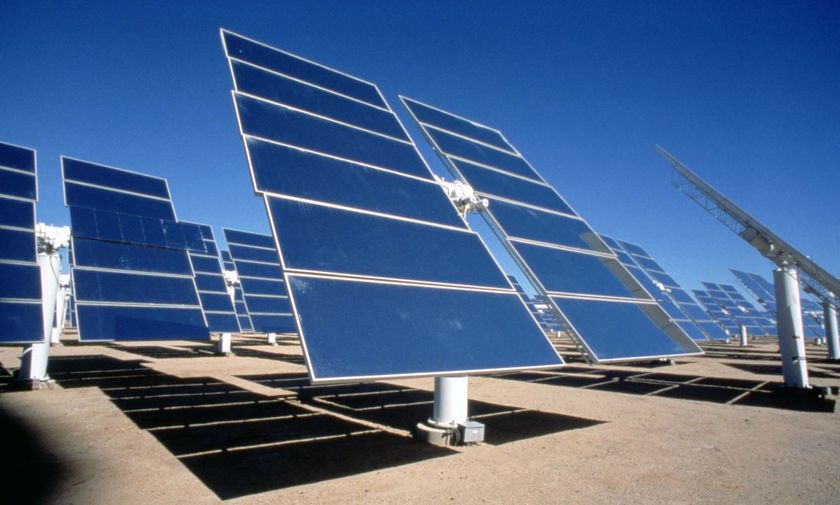
The Indian solar market which is expected to grow to around INR 15,000cr by 2013, presents a great opportunity for foreign solar energy companies to ride this opportunity and make it a win-win situation. Conventional energy (oil or coal) cannot be a long term option. We'll have to look at other sources for renewable clean energy. And for a country like India solar energy seems like a very viable option.

Follw the below link to read my article on the future of Solar power industry in India.

Using the sun to light the nights

Sunday, November 14, 2010

Mumbai’s war with political hoardings

Well there was a time when, while driving on Mumbai’s roads you would look out for those funny Amul billboards or have pretty film stars staring down at you from advertising hoardings. But off late the only hoardings/billboards you get to see every where are put up by political parties wishing their leaders a happy birthday or congratulating them on some electoral win or welcoming them into the city or .. uummm …. just about anything! So instead of your pretty Bollywood starlets, we have kurta or lungi clad ugly politicians in various poses staring into your face through awful & garish hoardings. I had once actually seen a nanasaheb someone pose with his dog on such a hoarding!! In fact I had read somewhere that nearly 90% of the hoardings in Mumbai are political while the remaining are religious or cultural. To add to it political parties mostly pay fees only for 50% of their total hoardings while the rest are illegal. Should we be surprised? Instead of earning revenues from these political hoardings, BMC spends around INR 1lac daily to get them removed as it has to deploy a vehicle and four employees in each ward every day to bring them down.
So it was really encouraging to see Maharashtra’s new CM, Prithviraj Chavan ordering his supporters to pull down all the hoarding congratulating him on becoming the CM. This led to BMC going on overdrive and pulling down over 500 unauthorised hoardings in Mumbai in a single day!
Actually in July 2010, Mumbai high court had said that a political leader whose picture appears on illegal hoardings or banners can be prosecuted. But funnily the fine for illegal display of hoardings in India is INR 50 to 100 irrespective of their size. Continuing offense attracts a princely penalty of INR 10/day! Also politicians argue that these banners do not bear the name of the person who put them up, so it gets difficult to prosecute the offender. But I think it’s high time our leaders are made accountable for acts of their party workers. There has to be a code of conduct for the party. Some one has to be accountable. We cannot let them treat our city as their personal blackboard!

Tuesday, November 09, 2010

A speech by Narayana Murthy on Sitting late at work

Infosys' Chairman and Chief Mentor Officer (CMO) - Mr. Narayana Murthy's Speech on Late Sitting:

Hope that many of us start leaving early for home after reading this... I am not relating this to the present scenario. I know people whowork 12 hours a day, six days a week, or more. Some people do so because of a work emergency where the long hours are only temporary. Other people I know have put in these hours for years. I don't know if they are working all these hours, but I do know they are in the office this long. Others put in long office hours because they are addicted to the workplace. Whatever the reason for putting in overtime, working long hours over the long term is harmful to the person and to the organization. There are things managers can do to change this for everyone's benefit. Being in the office long hours, over long periods of time, makes way for potential errors. My colleagues who are in the office long hours frequently make mistakes caused by fatigue. Correcting these mistakes requires their time as well as the time and energy of others. I have seen people work Tuesday through Friday to correct mistakes made after 5 PM on Monday.

Another problem is that people who are in the office for long hours are not pleasant company.
They often complain about other people (who aren't working as hard); they are irritable, or cranky, or even angry. Other people avoid them. Such behaviour poses problems, where work goes much better when people work together instead of avoiding one another. As Managers, there are things we can do to help people leave the office. First and foremost is to set the example and go home ourselves. I work with a manager who chides people for working long hours. His words quickly lose their meaning when he sends these chiding group e-mails with a time-stamp of 2 AM, Sunday.

Second is to encourage people to put some balance in their lives. For instance, here is a guideline I find helpful:
1) Wake up, eat a good breakfast, and go to work.
2) Work hard and smart for eight or nine hours.
3) Go home.
4) Read the comics, watch a funny movie, dig in the dirt, play with your kids, etc.
5) Eat well and sleep well.

This is called recreating. Doing steps 1, 3, 4, and 5 enable step 2. Working regular hours and recreating daily are simple concepts. They are hard for some of us because that requires personal change. They are possible since we all have the power to choose to do them. In considering the issue of overtime, I am reminded of my eldest son. When he was a toddler, If people were visiting the apartment, he would not fall asleep no matter how long the visit, and no matter what time of day it was.! He would fight off sleep until the visitors left.. It was as if he was afraid that he would miss something. Once our visitors' left, he would go to sleep. By this time, however, he was over tired and would scream through half the night with nightmares. He, my wife, and I, all paid the price for his fear of missing out. Perhaps some people put in such long hours because they don't want to miss anything when they leave the office. The trouble with this is that events will never stop happening. That is life! Things happen 24hours a day. Allowing for little rest is not ultimately practical. So, take a nap. Things will happen while you're asleep, but you will have the energy to catch up when you wake.

Hence "LOVE YOUR JOB BUT NEVER FALL IN LOVE WITH YOUR COMPANY (Because you never know when it stops loving you)" - Narayana Murthy

Tuesday, October 26, 2010

Diwali - The festival of pollution?

Its just one week to Diwali, and everyone is already excited about buying new clothes, sweets, greeting cards, lanterns, gifts, crackers ……. hhmmm ….. crackers …. lets get straight to the point.
Is Diwali all about shooting rockets in the air, lighting 'anars' and 'chakris' and blasting bombs? Do we even give a thought to what happens to the ecology after we blow away loads of money on crackers?

One Diwali night causes as much damage to the ecology as regular pollution does over the span of a year. The heavy smog full of sulphur nitrates, magnesium, and nitrogen dioxide can be felt even days after Diwali is over. Thousands of people, mostly kids, get injured while bursting crackers every year. Not to forget the tons of toxic garbage strewn around on the day after Diwali, which is mind numbing. Approximately 8,000 additional metric tonnes of garbage was released in Mumbai alone last year.
Also there are thousands of under privileged kids who sit late into the night manufacturing crackers which are made using harmful chemicals and acids. These kids work from morning to night, breathing these harmful fumes and coming into constant skin contact with the chemicals. They burn their hands, legs and eyes, and many get maimed for life. The conditions they work in are inhumane and the compensation, pitiful.
Does that mean we just stop bursting crackers during Diwali? No, but we can surely deal with it in a more considerate manner. Instead of every family spending thousands of rupees on crackers, we can have societies/schools hold public display of fireworks. This can be done on school grounds, playgrounds or open areas where it’s safe to burst crackers. Care should be taken to avoid noisy crackers and first aid should be always around. In this way we can enjoy crackers but avoid exploitation of the ecology.
It’s high time we remember Diwali is a festival of lights and not of pollution!!
Happy Diwali.

Tuesday, October 19, 2010

Indian M&A activity on the rise (April to Sept 2010)

The Indian Mergers and Acquisition scenario started with a bang in 2010 with Indian companies announcing M&A deals valued at an impressive USD 14bn in just the first 45 days. In contrast, corporate India was involved in M&A transactions worth only USD 11.9bn.in the previous year 2009, when the worldwide economic slowdown forced Indian companies to look within the boundaries of the nation for merger and acquisitions deals. Domestic deals had accounted for more than 60% of the total USD 11.9bn worth of deals last year. But now, the drift seems to be changing as more and more domestic companies are venturing out and have announced a number of multi million dollar international acquisitions like the USD 9bn Bharti-Zain deal, which happened in March this year.
As per ISI Emerging Markets data base, a total of 220 M&A deals were announced with a total deal value of over USD 28.56bn in the first six months of the financial year 2010 (April to September).
Out of these 91 were domestic deals amounting to a deal value of USD 14bn, 40 were outbound deals where Indian companies acquired a foreign target (deal value USD 5.9bn) and 85 inbound deals saw Indian companies being acquired by foreign firms (deal value USD 7.9bn).
The biggest deal in the first 2 quarters of financial year 2010 was, Vedanta Resources Plc, the UK-listed metals and mining company agreeing to acquire between 51% and 60% in Cairn India, the listed Indian oil and Gas Company. But the deal is currently stuck up in red tape, with Cairn needing at least 10 separate clearances from the petroleum ministry before it can close the deal.
Sector wise analysis:

A sector wise analysis shows that the Oil and Gas sector accounted for 31 per cent of the total M&A deal value while telecom accounted for 13 per cent.
Electric power generation was the third most-active sector, as it contributed 12 per cent in deal value for the first two quarters of financial year 2010.

Month wise analysis
The month of September saw the maximum number of M&A deals (50 deals), but as deal values for many transactions in that month were not disclosed, the total deal value for September was USD 3.47bn.

The month of August saw the highest aggregate deal value of USD 11.63bn, which was because of the USD 9bn Cairn-Vedanta deal.
The rise in the number of outbound deals provides clear proof that corporate India is consolidating and at the same time aggressively working on global expansion. As global economy continues to recover from recession blues, I believe that interest in outbound activity will continue as Indian companies target global expansion to boost both growth and resources, with a focus on medium sized deals. However, it will still take some time before corporate India can mirror the peak deal activity levels of 2007-08.
Notes: Includes deals announced in the period of April-September 2010. Includes joint ventures, acquisition of minority stakes & restructuring deals
Source: ISI Emerging Markets Database

Sunday, October 17, 2010

India to bid for Olympics 2020 – case of putting the cart before the horse?

Well finally the Commonwealth Games are over and India came a creditable second in the medals tally. What started with a sour taste, thankfully ended with a silver lining. The whole world stood up and appreciated India’s efforts, while the opening and closing ceremonies received special mention in the global press. Indians showed the world that they can organize an event of such big magnitude and make it a grand success. So should we be really proud of ourselves as Indians?

As we bask in the afterglow of the mega event, have we forgotten the rampant corruption which shook the nation a month ago? Did we achieve the main objective of the Games in terms of promoting sports, infrastructure and tourism? Did we manage to showcase India as a progressive developed world power?

Even before we try to get answers to the above questions, interestingly now dear Mr. Kalmadi and the Indian Olympic Association has announced that they want India to bid for the 2020 Olympics! What does this mean? Another chance to fill up their pockets?

Do we really need to spend so much on a mega event, where a country of a billion people cannot even win a handful of medals? Even today nearly 30% of India’s population lives under the poverty line, the overall national literacy rate is just about 65% and most people still do not have basic sanitation facilities. There isn’t even basic sports infrastructure in most Indian cities. Most of our athletes come from rural areas, get basic training facilities and have to undergo tremendous hardships to just even survive. Even today India has less then 25 astro turf grounds for hockey, (is it still really our national game?) while in a country like Holland, which is maybe as much as the size of Goa, there are more than 450 astro turf grounds!!

Interestingly, the budget allocation for sports this year (2010) in India, has gone down from last year's Rs 3,706 crore to Rs 3,565 crore, a major chunk of which, Rs. 2,069, crores was earmarked for the Commonwealth Games. More money is being spent on events than sports promotion and development. Now isn’t this a perfect example of ‘Putting the cart before the horse’.

Instead of dreaming about mega events like Olympics, we should first concentrate on improving our grass root level sports infrastructure. We need a sports academy in every state dedicated for the development of sportsmen (not cricket) and sports. Sports should be made an integral part of elementary education. Scouts should be nominated to visit every small town of India and hunt for talent which can be nurtured. We need sportsmen and athletes before sports events. But only if the Indian Olympic Association understood this!

Saturday, September 25, 2010

A Leader Should Know How to Manage Failure

Came across this wonredful interview of our ex-president Mr Kalam and thought it would be a nice idea to share (Former President of India APJ Abdul Kalam at Wharton India Economic forum, Philadelphia, March 22, 2008)

Question: Could you give an example, from your own experience, of how leaders should manage failure?

Kalam: Let me tell you about my experience. In 1973 I became the project director of India's satellite launch vehicle program, commonly called the SLV-3. Our goal was to put India 's "Rohini" satellite into orbit by 1980. I was given funds and human resources -- but was told clearly that by 1980 we had to launch the satellite into space. Thousands of people worked together in scientific and technical teams towards that goal.

By 1979 -- I think the month was August -- we thought we were ready. As the project director, I went to the control center for the launch. At four minutes before the satellite launch, the computer began to go through the checklist of items that needed to be checked. One minute later, the computer program put the launch on hold; the display showed that some control components were not in order.

My experts -- I had four or five of them with me -- told me not to worry; they had done their calculations and there was enough reserve fuel. So I bypassed the computer, switched to manual mode, and launched the rocket. In the first stage, everything worked fine. In the second stage, a problem developed. Instead of the satellite going into orbit, the whole rocket system plunged into the Bay of Bengal . It was a big failure.

That day, the chairman of the Indian Space Research Organization, Prof. Satish Dhawan, had called a press conference. The launch was at 7:00 am, and the press conference -- where journalists from around the world were present -- was at 7:45 am at ISRO's satellite launch range in Sriharikota [in Andhra Pradesh in southern India ].

Prof. Dhawan, the leader of the organization, conducted the press conference himself. He took responsibility for the failure -- he said that the team had worked very hard, but that it needed more technological support. He assured the media that in another year, the team would definitely succeed.

Now, I was the project director, and it was my failure, but instead, he took responsibility for the failure as chairman of the organization.

The next year, in July 1980, we tried again to launch the satellite -- and this time we succeeded. The whole nation was jubilant. Again, there was a press conference. Prof. Dhawan called me aside and told me, "You conduct the press conference today."

I learned a very important lesson that day. When failure occurred, the leader of the organization owned that failure. When success came, he gave it to his team. The best management lesson I have learned did not come to me from reading a book; it came from that experience.

Monday, August 16, 2010

Commonwealth Games or ‘Personal wealth’ Games?

Just after the closing of the 2006 Commonwealth Games in Australia, when it was announced that India was elected to host the 2010 Commonwealth Games, a wave of jubilation swept through out the nation. The Indian Olympic Association promised to dish out the best even sporting bonanza even seen in India.

The total budget estimated for hosting the Games is USD 1.6 billion; and this amount excludes non-sports-related infrastructure development in the city like airports, roads and other structures. This will likely make the 2010 Commonwealth Games the most expensive Commonwealth Games ever. The first question which comes to mind is - do we really need to spend so much on these games, when there isn’t even basic sports infrastructure in the country? Most athletes have to spend their own money for training and coaching, and when they become successful because of their own efforts, the country claims them as ‘sons and daughters of the nation’!

Anyways, now that we have been selected to host the event, the picture today is absolutely shameful. Most of the games venue are incomplete and have been slated to miss the deadlines. Even the completed work has been branded as substandard, with leakages starting within a week’s time. Everyday the newspapers scream out reports of blatant corruption, irregularities in building standards, loss of revenue, or overpayments in handing out contracts. All this has been creating an absolutely sorry image of our country around the world.

Now when it’s just over a month remaining for the opening ceremony, our respected prime minister, Mr. Manmohan Singh has suddenly woken up and is taking a personal interest in the completion of the work for the games. He has appointed a new group of ministers to oversee preparations, visit games' venues each week to monitor progress and ensure contractors meet fresh deadlines.

We can only hope that the people concerned really buck up now, forget about filling their personal pockets and try to salvage the games and India’s image. It’s high time they stop making this a ‘Personalwealth Games’!!

Sunday, August 15, 2010

India's 64th Independence Day

As India celebrates its 64th independence day, let’s take a moment to think about all the people who laid down their lives for the country. Thousands of martyrs with a single dream of an independent motherland threw themselves into the freedom fight against the British. Their vision was a free independent, fair, democratic nation where the people’s progress is imperative. The question after 64 years is; have we achieved their dream?
Indian still is counted as a third world country with nearly 40% of the population living under the poverty line even today. Since 1991, inter-state economic inequality in India has consistently grown; the per capita net state domestic product of India's richest states is about 3.2 times that of the poorest states. With rampant corruption, internal conflicts, illiteracy, an ever growing population, we need to ask ourselves a lot of questions.
Actually, we all know what the problems and their solutions are. We just need to dig deep and think about all the martyrs who laid their lives, so that we enjoy freedom. We just need to take the correct decisions, do the right things. Today, let’s each one pledge to make this country a better place to live in, by contributing our squirrel’s share. Jai Hind !

Interview Bloopers

Over the last few years that I have been conducting interviews at VN as well as at my earlier jobs, there have been many memorable inst...